Important
WhatsApp is no longer just a chat app; it's a critical logistics tool. For Indian D2C brands, automated WhatsApp flows are the difference between an 18% RTO rate and an 8% RTO rate.
In the US, a customer gets an email receipt and expects delivery in 2 days. In India, a customer gets a WhatsApp message and trusts their order is real.
This single behavioral difference changes everything about how D2C operations should work.
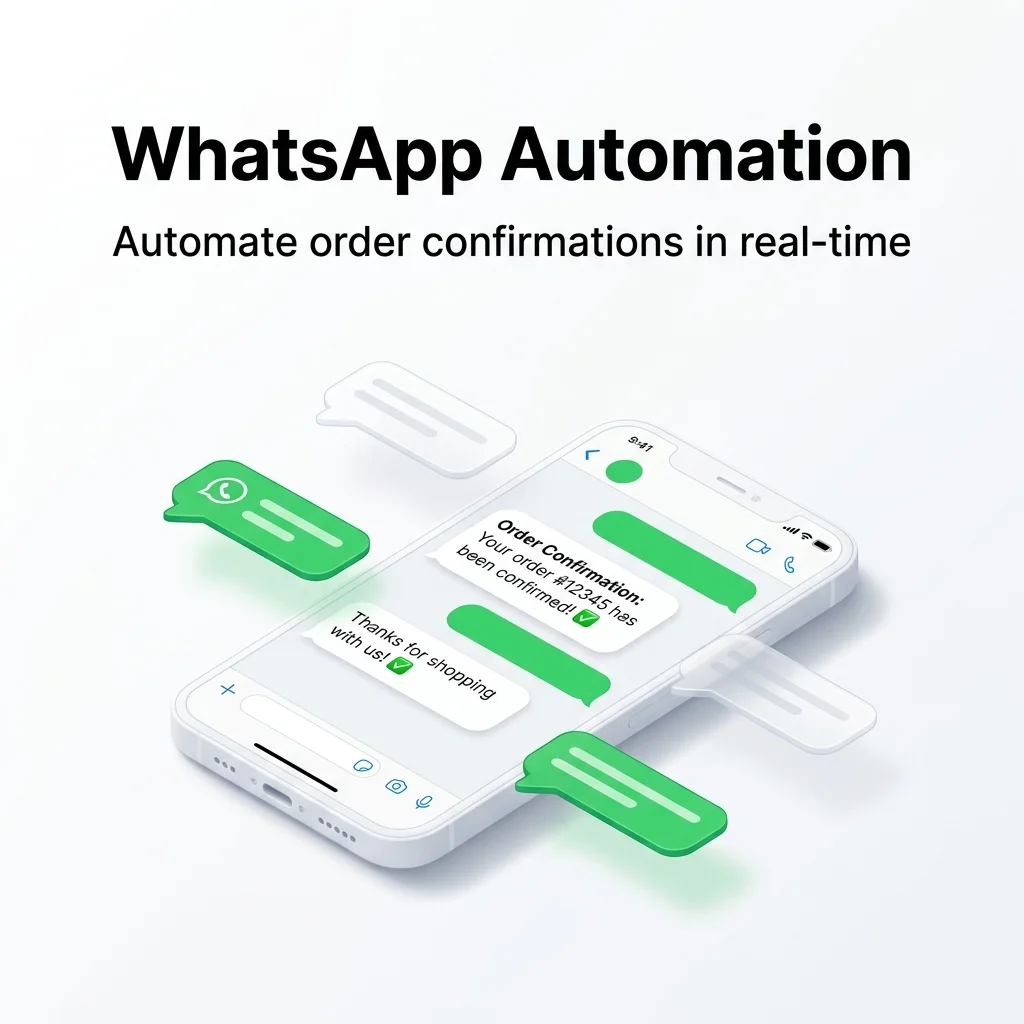
OrdersPilot's most powerful feature isn't its dashboard. It's the WhatsApp Business API integration. We connect to your store via official Shopify Admin APIs and send automated notifications using the official Meta WhatsApp Business API Documentation. Sending one automated WhatsApp message at the right time cuts RTO rates by 6-12 percentage points. That's ₹60K-₹1.2L per month in recovered revenue for a 1,000-order-per-day brand.
Here's why WhatsApp matters more than SMS or email in India, and how to use it to transform order confirmations.
The Indian Customer Reality
WhatsApp Penetration in India:
- 500+ million active users (vs. 180M email users)
- 77% of smartphone users have WhatsApp
- 61% prefer WhatsApp for customer service (vs. 8% for email)
Behavioral Differences from Western e-commerce:
-
WhatsApp = Personal confirmation. An email receipt feels corporate. A WhatsApp message feels like a real person acknowledged your order.
-
Immediate confirmation = Order is "real". In prepaid, payment confirmation = order real. In COD, WhatsApp from seller = order is real.
-
Chat history = Proof of purchase. If there's a dispute, showing the WhatsApp message thread is proof of order details, pricing, expected delivery.
-
Callback = Relationship. When a brand sends "Hi [name], is this address correct?" the customer feels heard. They're more likely to accept delivery.
The Problem: Silent Order Abandonment
An order comes in at 11 PM on Wednesday. No WhatsApp message. Customer forgets about it. By Thursday morning, they're not home. By Friday, the delivery attempt fails. RTO.
Or worse: Customer's circumstances changed. They ordered on impulse. No reminder arrives. Refund expectation isn't set. When the order arrives, they refuse payment.
Without WhatsApp confirmations:
- 12% of customers abandon COD orders within 24 hours
- 18% of customers forget their own orders by delivery date
- 8% have changed their mind but delivery still attempted
Result: RTOs you could have prevented.
How OrdersPilot Uses WhatsApp
OrdersPilot sends WhatsApp messages at three critical moments:
Message 1: Order Confirmation (Within 30 minutes)
Timing: As soon as calling team confirms the order Content: "Hi [name], your [PRODUCT] order for ₹[price] is confirmed! Expected delivery: [DATE]. Track: [link]"
Impact:
- Locks customer commitment
- Sets delivery expectation early
- Reduces "I forgot I ordered" RTOs by 8%
Message 2: Pre-Pickup Confirmation (24 hours before shipment)
Timing: Day before courier pickup Content: "Hi [name], your [PRODUCT] worth ₹[price] ships tomorrow via [COURIER]. Please ensure someone's home. Confirm: Yes/No"
Impact:
- Reminds customer to expect delivery
- Allows address corrections before pickup
- If no response, calling team can follow up
- Reduces "failed delivery attempt" RTOs by 6%
Message 3: Order Shipped + Tracking (At pickup)
Timing: When courier picks up the order Content: "Hi [name], your order is on the way! Tracking: [LINK] via [COURIER]. Our agent will call before delivery."
Impact:
- Builds customer confidence
- Reduces "where's my order?" support tickets by 35%
- Allows customer to prepare for delivery
- Reduces failed delivery attempts by 4%
Real Data: WhatsApp Confirmation Impact
Eliora India (Fashion D2C)
Before WhatsApp Automation (Manual Messages):
- RTO rate: 16.2%
- Order confirmation rate: 65% (calling team doing manual WhatsApp)
- Time per message: 3 minutes (calling agent typing manually)
After OrdersPilot WhatsApp Automation:
- RTO rate: 10.8% (-5.4 percentage points)
- Order confirmation rate: 88% (templates + auto-send)
- Time per message: 15 seconds (automation)
Monthly impact (2,000 orders/day):
- RTOs reduced: 1,080 orders/month → 648 orders/month
- Revenue recovered: ₹43.2L → ₹25.92L (negative) = ₹17.28L saved
- Labor saved: Calling team handling manual messages = 0 hours now
Sparkara (Jewelry D2C)
Challenge: High-value orders (₹3K-₹15K average). Payment risk was massive.
Before WhatsApp:
- RTO rate: 22% (customers refusing ₹10K+ orders)
- Confirmation rate: 58% (customers not picking up phone)
- Average order value at risk per failed RTO: ₹7,500
After OrdersPilot:
- RTO rate: 14% (-8 percentage points, 36% reduction)
- Confirmation rate: 92% (WhatsApp reminder resonates)
- Orders saved per month: 240 orders × ₹7,500 = ₹18L recovered
Why WhatsApp worked for high-value orders:
- Trust signal: "If they know my name and order details, it's legit"
- Security: Customer feels in control (can confirm/deny before delivery)
- Urgency: Message reminds high-commitment customers to prepare
The Psychology: Why WhatsApp Beats Email/SMS
| Channel | Reach | Trust | Read Time | Action |
|---|---|---|---|---|
| 68% open rate | "Another promo" | 2.5 hours | Low | |
| SMS | 98% open rate | "Who is this?" | 5 minutes | Medium |
| 92% open rate | "A real person" | 2 minutes | High |
Why WhatsApp wins:
- Group chat context: Customer sees brand name + message in one thread
- Personal feel: Not blast marketing, feels like a personal check-in
- Low friction response: Easy to reply "yes" or "no"
- Callback integration: If customer responds with a problem, calling team sees it instantly
Implementation: Setting Up WhatsApp in OrdersPilot
Step 1: Enable WhatsApp Business API
- Connect your WhatsApp Business account to OrdersPilot
- Verify phone number
- Get API access tokens
Step 2: Create Message Templates
Template 1 - Order Confirmation:
Hi {{customerName}},

Your {{productName}} order for ₹{{orderValue}} is confirmed!

📦 Expected delivery: {{deliveryDate}}
🚚 Track your order: {{trackingLink}}

Reply if you have any questions.

{{brandName}} Team
Template 2 - Pre-Pickup Reminder:
Hi {{customerName}},

Your {{productName}} (₹{{orderValue}}) ships tomorrow via {{courierName}}.

📍 Delivery to: {{address}}

Please confirm you'll be home:
- Reply YES to confirm
- Reply NO if address needs change

{{brandName}} Team
Template 3 - Shipped Notification:
Hi {{customerName}},

🚚 Your {{productName}} is on the way!

Tracking: {{trackingLink}}
Courier: {{courierName}}

Our agent will call before delivery.

{{brandName}} Team
Step 3: Set Automation Rules
- Auto-send Message 1 when order is confirmed
- Auto-send Message 2 24 hours before pickup
- Auto-send Message 3 at courier pickup
- Route replies to calling team for follow-up
Measuring WhatsApp Impact
Track these metrics:
Delivery Quality:
- RTO rate (should drop 6-12 percentage points)
- Failed delivery attempts (track "not home" vs. "refused")
- Repeated delivery attempts (WhatsApp reminder reduces these)
Customer Engagement:
- WhatsApp open rate (should be 90%+)
- Reply rate (should be 30-40%)
- Response time (should be <15 minutes)
Financial:
- Revenue recovered from prevented RTOs
- Cost per WhatsApp message (usually ₹0.15-0.40)
- ROI: (RTOs prevented × avg order value) / message cost
Eliora's example: 540 RTOs prevented × ₹8,000 = ₹43.2L recovered. Cost = 60,000 messages × ₹0.25 = ₹15K. ROI = 2,880x.
Best Practices for WhatsApp Confirmations
1. Timing Is Critical
- Confirmation message: Within 30 minutes of order placement (customer still engaged)
- Pre-pickup message: 18-24 hours before (enough notice, but not forgotten by delivery day)
- Shipped notification: Immediately at pickup (when customer should start expecting)
2. Personalization Matters
Always include customer name and order details. "Hi Priya" beats "Hi customer." "Your PREMIUM WATCH V3 worth ₹4,299" beats "Your order."
3. Call to Action
Make it easy to respond:
- Confirmation: "Reply YES to confirm delivery"
- Pre-pickup: "Reply YES if address is correct"
- Shipped: "Track here: [link]"
4. Handle Replies
When a customer replies, route it to calling team automatically. OrdersPilot does this:
- "Address is wrong" → Pop up on calling agent's screen for immediate correction
- "Too expensive, cancel" → Calling team can try to retain or process refund
- "Deliver during work hours" → Special delivery instructions added
5. Template Variations by Product Type
- Low-value items (₹500): Keep message short
- High-value items (₹10K+): Add security/legitimacy signal ("We're a registered brand, trusted by 50K+ customers")
- Fragile items (jewelry, electronics): Add care instructions
The Bottom Line
WhatsApp confirmations aren't about being "nice" to customers. They're about:
- Locking customer commitment before they change their mind
- Reducing operational failures (address errors, delivery timing)
- Recovering revenue from orders that would have become RTOs
- Cutting labor (automation beats manual messages)
For Indian D2C brands, WhatsApp is non-negotiable. It's the difference between 18% RTO and 8% RTO. That's the difference between scaling profitably and burning cash.
Ready to implement WhatsApp confirmations? Schedule a demo to see how OrdersPilot automates your customer communication and cuts RTOs.
Author
Growth Team
Deeply passionate about optimizing e-commerce logistics and building systems that help D2C founders regain control of their operations.
Enjoyed this article?
If you found this helpful, share it with your network and help other Shopify founders scale their operations.
Recommended Articles
Continue your journey with more insights from our team.