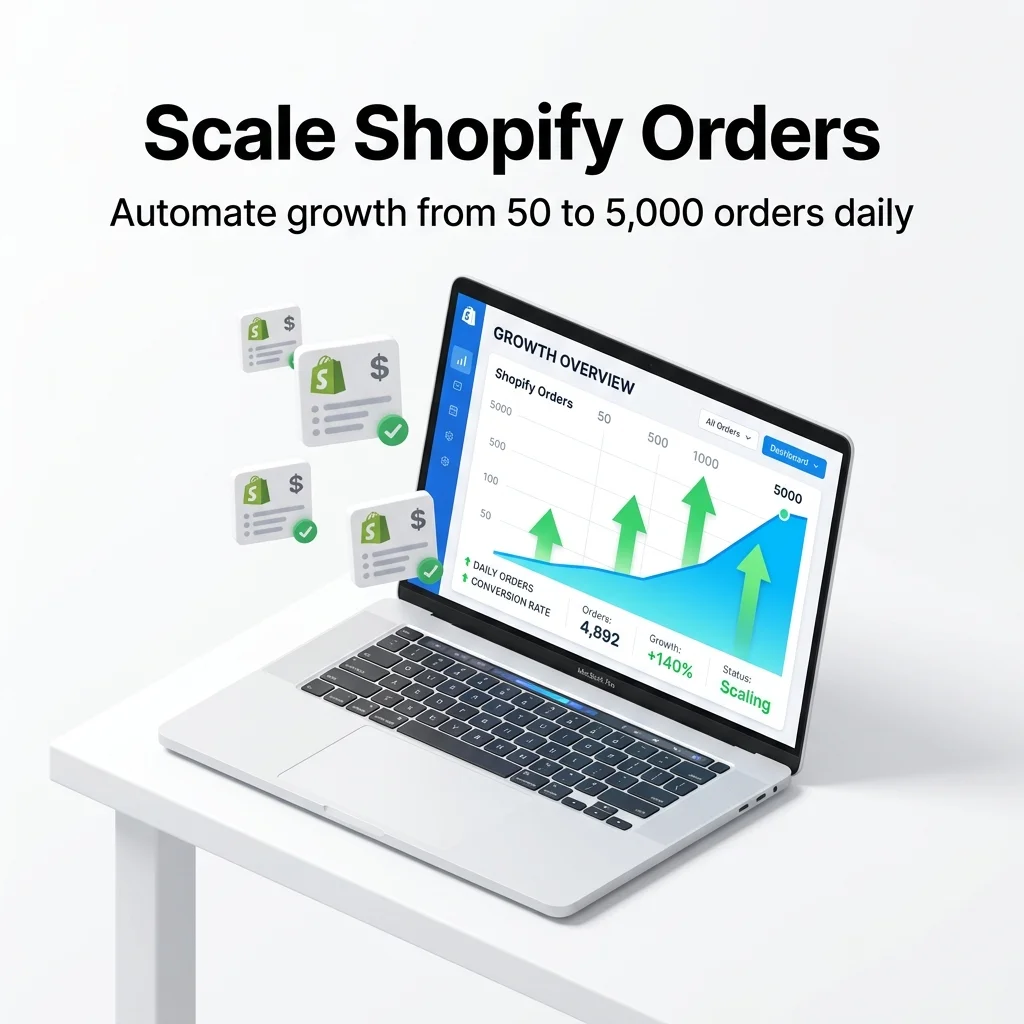
Scaling a Shopify brand is thrilling until your backend operations break. When you hit 5,000+ orders a month, relying on spreadsheets and manual native Shopify tools becomes impossible. In this guide, we'll show you how to transition to a true Shopify Order Management System (OMS).
The Breaking Point: When Native Shopify Isn't Enough
Shopify is the undisputed king of storefronts. However, its native backend struggles with complexity. You know you've outgrown native tools when:
- You are manually syncing inventory between Shopify and other marketplaces.
- You're spending hours routing orders to different 3PLs based on geography.
- You frequently experience overselling and stockouts.
What is a Shopify Order Management System (OMS)?
A dedicated OMS acts as the command center for your entire operation. It sits between your storefront(s) and your fulfillment centers, orchestrating the flow of data.
1. Multi-Store Inventory Sync
If you run multiple Shopify stores (e.g., regional stores like .com, .co.uk), an OMS acts as the single source of truth for inventory. When an item sells on the UK store, the OMS instantly deducts that stock from the US store to prevent overselling globally.
2. Intelligent Order Routing
Instead of manually deciding which warehouse ships which order, an OMS automatically routes orders based on proximity to the customer, shipping cost, or stock availability.
3. Returns Management & Automation
An OMS automates the return workflow, instantly updating inventory levels once a return is received and triggering refunds without manual intervention.
Shopify Flow vs. Dedicated OMS
Many merchants try to solve complex logistics using Shopify Flow. While Flow is great for simple conditional actions (like tagging high-value orders), it is not a logistics engine. It cannot perform complex multi-location routing logic or sync inventory across disjointed stores seamlessly.
That's where a solution like OrdersPilot comes in. OrdersPilot is built specifically to bridge the gap between Shopify's elegant frontend and the messy reality of global fulfillment.
Best Practices for Implementation
- Standardize SKUs: Before implementing an OMS, ensure your SKUs match exactly across all sales channels and your 3PL.
- Map Your Workflows: Document your ideal order flow before touching software.
- Start with One Channel: If you sell on multiple platforms, connect Shopify first, stabilize, then add the others.
Conclusion
Scaling doesn't have to mean proportional increases in operational headaches. By investing in a robust Shopify Order Management System, you can automate the mundane and focus on growth.
Author
Growth Team
Deeply passionate about optimizing e-commerce logistics and building systems that help D2C founders regain control of their operations.
Enjoyed this article?
If you found this helpful, share it with your network and help other Shopify founders scale their operations.
Recommended Articles
Continue your journey with more insights from our team.